
























Hormones and HRT
HRT risks & benefits
Worried about HRT risks? Unclear about the benefits? We answer your questions and provide expert advice.


Everything you need to know about Evorel Conti patches
Evorel Conti is a form of continuous combined hormone replacement therapy (HRT). It contains both oestrogen and progestogen in a single transdermal patch, designed for women who are postmenopausal, meaning at least 12 months have passed since their last period. As a continuous combined HRT patch, both hormones are delivered every day without a break, helping to keep hormone levels stable and preventing a monthly bleed.
Hormone replacement therapy patches deliver hormones directly through the skin, bypassing the digestive system and the liver's first-pass metabolism. This transdermal route is associated with a lower risk of blood clots compared to oral HRT tablets, and is often preferred for women where this distinction is clinically relevant.

Medically reviewed by Dr. Liz Andrew
BMS Accredited Doctor
 Reviewed: 21/02/2025 Published: 19/03/2025
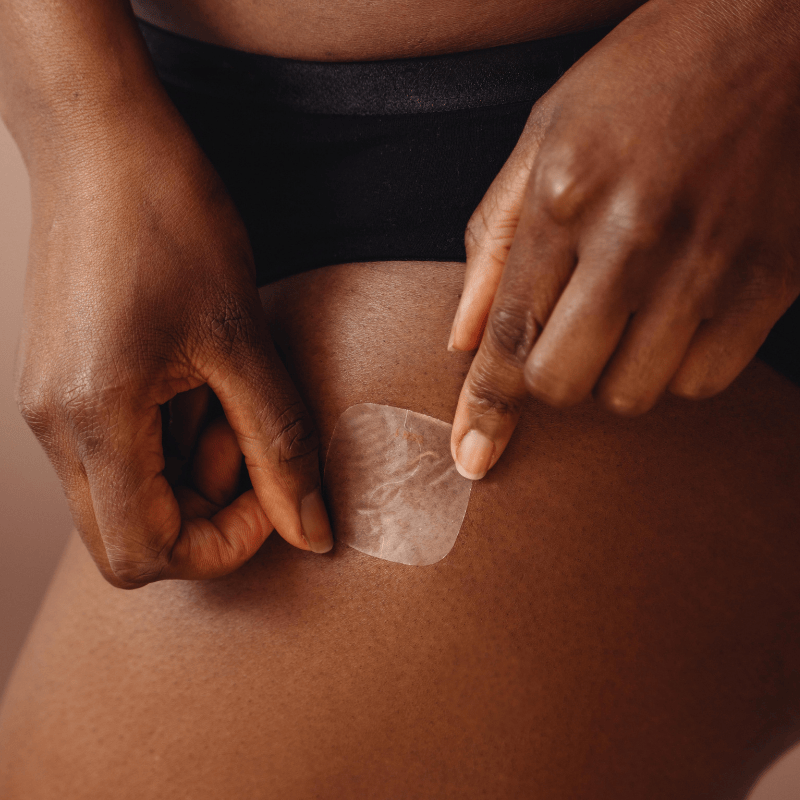
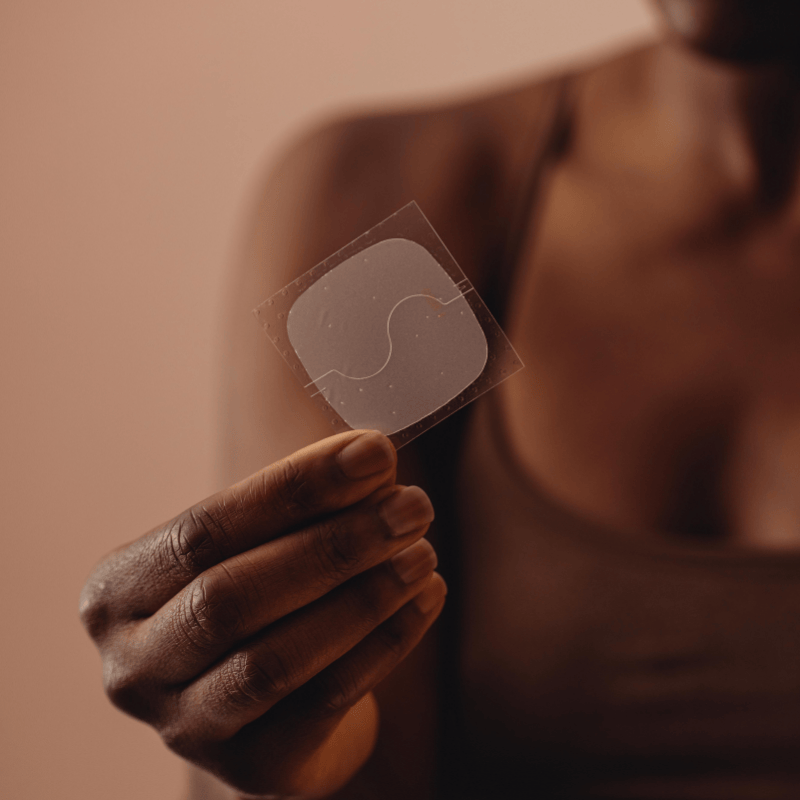
Evorel Conti is a continuous combined HRT patch containing two hormones: estradiol (a body-identical oestrogen) and norethisterone (a synthetic progestogen). It is designed for women who are postmenopausal and have a womb.
The patch works in two ways. Oestrogen replenishes declining levels to relieve menopausal symptoms, including hot flushes, night sweats, sleep disruption, mood changes, brain fog, and joint discomfort. The progestogen protects the lining of the womb, which is a clinical necessity for any woman with a uterus who is taking oestrogen. Because both hormones are delivered continuously and simultaneously, there is no monthly withdrawal bleed, which many women find simplifies their treatment considerably.
Continuous combined HRT means that oestrogen and progestogen are taken together every day without a break, rather than in a sequential pattern. Sequential HRT, by contrast, involves taking progestogen for only part of the cycle, which produces a monthly withdrawal bleed. Continuous combined therapy is designed for women who are postmenopausal and is intended to be bleed-free. Evorel Conti is a continuous combined HRT patch, meaning both hormones are delivered through the skin at the same time, every day.
Partially. The estradiol in Evorel Conti is body-identical, meaning it has the same chemical structure as the oestrogen produced naturally by the body. The progestogen component, norethisterone, is synthetic. It is included specifically to protect the womb lining and is necessary for women who have not had a hysterectomy. Body-identical oestrogen is the form recommended in current UK clinical guidance and is the standard prescribed at Menopause Care.
Evorel Conti is a safe and well-established form of HRT for many postmenopausal women. Because the hormones are absorbed transdermally rather than taken orally, they bypass the liver, which is associated with a lower risk of blood clots compared to oral oestrogen tablets. As with all HRT, the balance of benefits and risks is individual and should be discussed with your doctor in the context of your full medical history. Your clinician will help you determine whether Evorel Conti is the most appropriate option for you.
There is no clinical evidence that Evorel Conti causes weight gain. Some women notice temporary bloating or fluid retention when starting HRT, but this typically settles within the first few weeks to months as the body adjusts to the new hormone levels. Weight changes around menopause are primarily driven by hormonal shifts, changes in metabolism, and lifestyle factors rather than by HRT itself. In fact, stabilising oestrogen levels through HRT can support metabolic function and help prevent the changes in body composition that often accompany menopause. If bloating or fluid retention persists beyond three months, it is worth discussing with your clinician, as a formulation adjustment may help.
Evorel Conti is designed to prevent bleeding. However, some women experience light spotting or irregular bleeding in the first few months of use as the body adjusts to continuous combined therapy. This is relatively common and usually resolves on its own. If you experience persistent irregular bleeding after six months, or heavy bleeding at any point, you should speak to your doctor promptly to rule out other causes.
Light spotting in the first three to six months is generally an expected part of the adjustment period and does not usually require urgent action. However, any heavy bleeding, or any bleeding that begins or continues beyond six months of use, should be assessed by a doctor. Your clinician will want to rule out causes unrelated to the HRT, and may review whether the current formulation or dose is the right fit for you.
No. Evorel Conti is formulated at a fixed dose and is not designed to be doubled. If your symptoms are not adequately controlled on a single patch, the right approach is to speak to your doctor about adjusting your treatment, which may involve a different formulation, dose, or delivery method, rather than applying an additional patch. Always consult your clinician before making any changes to your HRT.
Yes. Evorel Conti patches are available as part of the medication credit on our plans and are a commonly prescribed treatment. The final prescribing decision will always rest with your clinician, who will discuss your options during your appointment and agree a treatment plan with you. We are not able to guarantee any specific prescription in advance of a consultation.
Evorel Sequi is a sequential combined HRT patch designed for women who are still in perimenopause and are likely to be having, or have recently had, periods. It delivers oestrogen continuously but progestogen only for part of the cycle, which produces a monthly withdrawal bleed. Evorel Conti is for postmenopausal women and delivers both hormones continuously, without a bleed. The decision about when to transition from sequential to continuous combined therapy is an individual one, based on how long it has been since your last period, and is something your clinician will guide you through.
The oestrogen delivered by Evorel Conti:
The norethisterone (progestogen) in the patch protects the lining of the womb from the stimulating effect of oestrogen, which is a clinical requirement for all women with a uterus taking oestrogen therapy.
The twice-weekly patch change schedule also removes the daily burden of remembering oral medication, which many women find makes it easier to maintain a consistent treatment routine.

Book a complementary discovery call with our patient expert Jane James. Jane can help you by:

Common side effects of Evorel Conti include:
Many women experience some side effects during the initial adjustment period, as the body adapts to having different hormone levels. This is normal and expected. Most side effects are mild and settle within the first few weeks of starting Evorel Conti. They should have resolved fully by your three-month review with your clinician. Skin irritation at the application site is one of the most commonly reported effects and can usually be minimised by rotating application sites with each patch change.
If side effects are significantly affecting your quality of life, or if they have not settled by the three-month mark, speak to your clinician. A change in formulation, dose, or delivery method may resolve the issue. If you experience severe side effects at any point, or anything that concerns you, contact your doctor promptly rather than waiting for a scheduled review.
Apply directly to clean skin
The patch should be applied to skin that is clean, completely dry, and free from lotions, oils, or creams. Any residue on the skin can affect how well the patch adheres and how consistently the hormones are absorbed. Replace the patch twice per week
Apply to the lower abdomen or buttocks
Place the patch on the lower abdomen or buttocks. It is important to keep the patch below the waist. Never apply it near the breasts
Avoid areas of skin irritation or tight clothing
Do not apply the patch to skin that is red, broken, or irritated. Avoid areas where clothing fits tightly, as friction can cause the patch to lift or peel
Rotate application sites
Use a different area of skin with each patch change to reduce the risk of local skin irritation. Keeping a simple record of where you applied the previous patch can help with this
Ensure the skin is completely clean, dry, and free of any product before applying the patch. Applying the patch immediately after a bath or shower, before any moisturiser or body lotion, usually improves adhesion. Pressing firmly on the patch for around 30 seconds after application, including around the edges, also helps. If the patch continues to lift, discuss this with your clinician, as an alternative formulation may suit your skin better.
If you remember within a day or so of a missed change, apply a new patch as soon as possible and continue on your usual schedule. If it has been longer, apply a new patch and adjust your change days accordingly. Your clinician will advise on the specific approach that is right for your regimen.
If you are considering stopping Evorel Conti, whether due to a change in health, personal preference, or reaching a point where you feel ready to come off treatment, this should be discussed with your clinician rather than done abruptly. Stopping HRT suddenly can cause a return of menopausal symptoms, sometimes more intensely than before. A gradual reduction, tapering the dose over time with clinical oversight, is generally a better approach and allows symptoms to be monitored and managed along the way. Your doctor will also want to ensure that your bone health and cardiovascular health remain protected during and after the transition away from treatment.
Supply of HRT patches, including Evorel Conti, can occasionally be affected by stock issues. If you are having difficulty obtaining your patches through your usual pharmacy, contact your clinical team promptly rather than skipping doses or switching products on your own. Your clinician or the Menopause Care team can advise on equivalent alternatives where supply is disrupted, and can help ensure your treatment is not interrupted.


Dr. Laura Cawley and Dr. Liz Andrew discuss Evorel Conti alongside other HRT patches and gel options in a recorded webinar covering HRT and testosterone products in detail. You can watch the fully recorded webinar on YouTube.


